How to Clean and Care for Chenille (Pipe Cleaner) Art
2026-09-20 · by Lumi atelier · Fujian, China
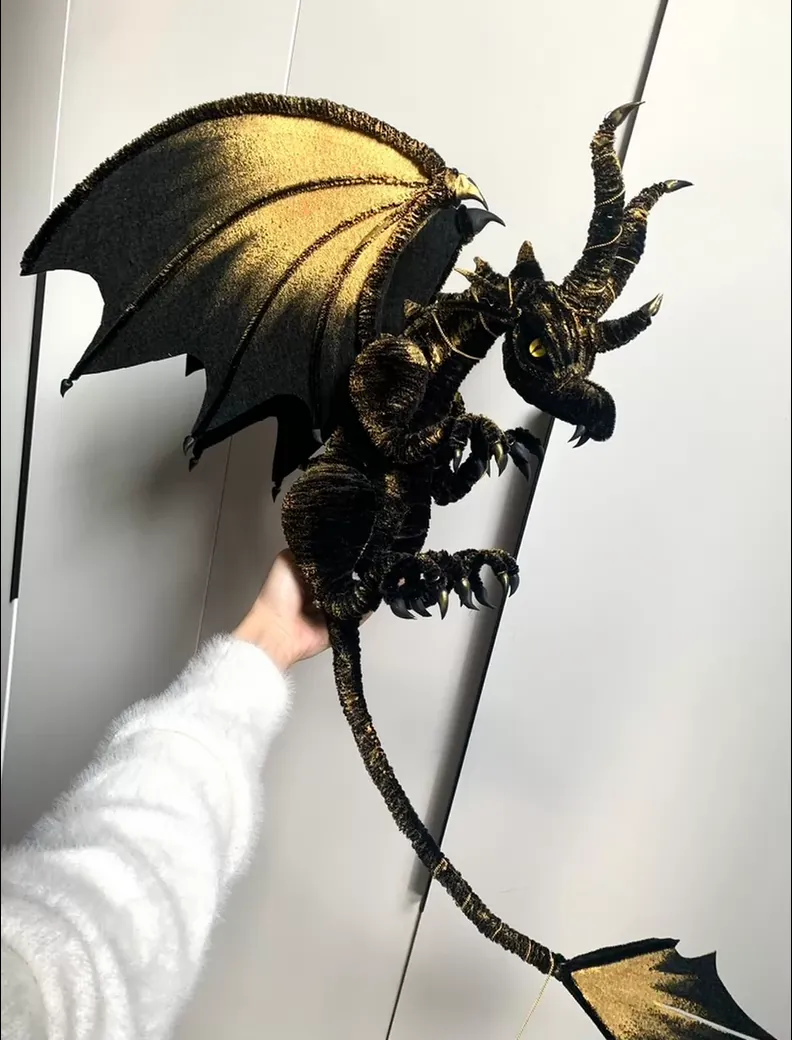
Handmade chenille art is more robust than it looks, and also more delicate than people assume. The wire core gives it structure; the fibre wrap is what needs looking after. Here is what actually works, and what quietly ruins a piece.
The one rule: keep it dry
Chenille is a fibre wrapped around a wire core. Water is the enemy for two reasons — it matts the fibres so they never fully lift again, and standing moisture can eventually mark the wire underneath.
Do not submerge, machine wash, or spray with a wet cleaner. Do not use a steam garment steamer near it.
If a piece gets genuinely dirty:
- Let it dry completely first — never work on damp fibre.
- Use a hairdryer on cool, held at least 30 cm away, to blow loose dust out of the wrap.
- For a stubborn mark, dab — do not rub — with a barely damp white cloth, then dry immediately with the cool setting.
- If that fails, message us. Sometimes a small section can be re-wrapped.
Dusting: what to use and what to avoid
| Tool | Verdict | Why |
|---|---|---|
| Hairdryer, cool setting | Best | Lifts dust out without touching the fibre |
| Soft make-up brush | Good | Gentle, precise, gets into tight curves |
| Compressed air | Acceptable, carefully | Short bursts only, held back; can distort fine detail |
| Feather duster | Avoid | Snags the wrap and drags the shape |
| Vacuum cleaner | Avoid | Suction is far too strong; it will deform the body |
| Wet wipe | Never | Water plus friction is the worst combination |
Once a month with a cool hairdryer is enough for most homes. In a dusty or smoky environment, do it fortnightly.
Sunlight: the slow damage
This is the one that catches people out, because nothing looks wrong for months. Direct sunlight fades chenille unevenly — the side facing the window lightens while the back keeps its original colour, and you cannot undo it.
- Avoid south-facing windowsills and any spot that gets direct afternoon sun.
- A shelf that gets indirect daylight is fine.
- If a piece must sit near a window, rotate it every few weeks so any fading happens evenly.
Humidity and heat
Keep chenille away from bathrooms, kitchens directly above a hob, and anywhere that regularly condenses. Sustained humidity is what causes the wire core to mark over years. Room temperature and normal indoor humidity is all it needs.
Reshaping: you are allowed to touch it
A common worry is that touching a handmade piece will ruin it. It will not. The wire core is designed to be adjusted.
- Bend gently with both hands, supporting either side of the curve.
- Make small corrections rather than one large movement.
- Never fold a section back on itself sharply — repeated hard creases fatigue the wire.
If a piece arrives slightly compressed from transit, give it a day at room temperature and then reshape slowly. It will come back.
Long-pile knitted hats: different material, different rules
The animal-ear hats use a long pile fabric, which behaves differently from chenille:
- Brush, do not wash. A wide-tooth comb or a soft brush along the pile direction restores the nap.
- Spot clean only. A barely damp cloth on the soiled area; never soak the ear structure, which is what holds the shape.
- Store on a shelf, not hung. Hanging by the ear or brim will slowly distort it.
- Pack loosely. If you are travelling, fill the crown with tissue so it keeps its shape inside a bag.
Packing a piece for storage or moving
If you need to put a piece away for a season:
- Dust it thoroughly first — dust left in the fibre will settle and mat over months.
- Wrap loosely in acid-free tissue, not cling film. Plastic traps humidity.
- Put it in a rigid box, not a bag, so nothing can press on the body.
- Store somewhere dry and dark. An under-bed box is fine; a loft that overheats in summer is not.
Frequently asked questions
Can I put a pipe cleaner dragon in the washing machine?
No. Water and agitation will matt the fibre permanently and can mark the wire core.
Why has the colour on one side faded?
Almost always direct sunlight. It cannot be reversed, so move the piece out of direct light to stop it getting worse.
Is it safe to handle?
Yes. The wire core is meant to be adjusted. Support both sides of a curve and make small corrections.
How do I get dust out of tight curves?
A hairdryer on cool, or a soft make-up brush. Compressed air in short bursts also works if you hold it back.
My hat's pile looks flat after shipping. Is it damaged?
Almost certainly not. Brush it along the pile direction and it will lift again. If it does not, contact us.
Every piece is made to order in Fujian. Custom colors, sizes and wholesale are welcome.
Start a custom order