Pet-Safe Fabrics: What to Look For and What to Skip
2026-09-28 · by Lumi atelier · Fujian, China
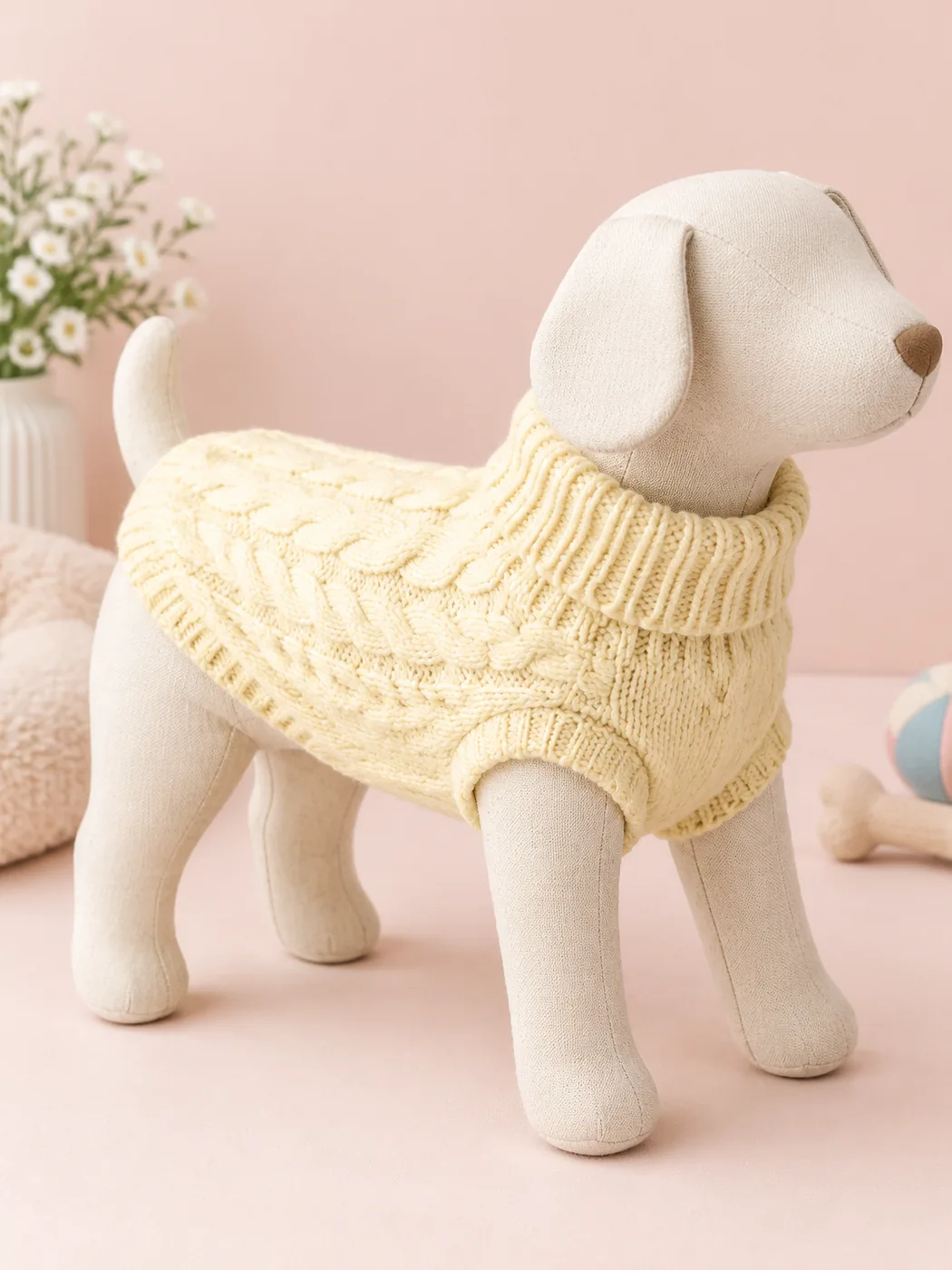
Choose fabrics by what they do, not by what they are called. The safe defaults for pet clothing and bedding are breathable natural fibres — cotton, linen, bamboo — and tightly woven synthetics that resist snagging. The things worth avoiding are loose threads, thin elastic, small glued-on decorations, heavy coatings that trap heat, and anything with a strong chemical smell when new.
No certification is needed to make those calls. They follow from how the material behaves. Here is the reasoning, fibre by fibre.
What actually makes a fabric risky for a pet?
Four things, in order of how often they cause real problems:
- Ingestible parts. Loose threads, hanging loops, pom-poms, buttons, glued-on studs, and anything that can be chewed off. This is the biggest risk by a wide margin, and it is a construction issue rather than a fibre issue — a cotton garment with a glued-on bow is more dangerous than a polyester one with clean seams.
- Trapped heat. Heavy coatings, thick foam backing, and non-breathable laminates hold heat against the skin. Pets regulate temperature largely through panting and through the pads, and a fabric that blocks airflow makes overheating much more likely.
- Constriction. Thin elastic that rolls into a cord, tight cuffs, and collars without the two-finger rule. Elastic narrows under tension and can cut in.
- Chemical residue. Strong solvent or adhesive smell that persists after airing. This is not about the fibre — it is about what was used on it.
Which fibres are the safe defaults?
| Fibre | Behaviour | Good for |
|---|---|---|
| Cotton | Breathable, absorbent, washes hot, softens with use | Everyday shirts, bandanas, light bedding |
| Linen | Very breathable, cools well, creases heavily | Summer wear, warm climates |
| Bamboo viscose | Soft, breathable, drapes well | Sensitive skin, summer shirts |
| Merino wool | Warm when damp, temperature-regulating, needs gentle washing | Winter knitwear for cold-weather breeds |
| Acrylic knit | Cheap, warm, holds shape, less breathable than wool | Sweaters for short outdoor periods |
| Tightly woven polyester | Strong, snag-resistant, dries fast, does not breathe well | Harnesses, leashes, outer shells, carriers |
| Canvas / cotton duck | Very hard-wearing, breathable, stiff at first | Beds, carriers, heavy-duty use |
The pattern is simple: breathable for anything worn against the skin for hours; strong and snag-resistant for anything structural.
Which should I be careful with?
Not forbidden — worth thinking about:
- Fleece and heavy synthetics next to the skin in summer. Fine for ten minutes outdoors; not for an afternoon indoors. Fleece traps air extremely well, which is exactly wrong in heat.
- Anything with a waterproof coating. Coatings stop breathability almost completely. Fine as a rain shell for a walk, wrong as bedding.
- Loose weaves and open knits. Claws catch in them. A cat can hook a loose knit and panic.
- Very thin elastic. Rolls into a cord under tension and narrows to a cutting edge. Use flat woven elastic instead.
- Anything that smells strongly of solvent or adhesive when new. Air it for 48 hours. If the smell persists, do not use it.
Does "natural" automatically mean safe?
No. Wool is natural and can be itchy against thin skin. Cotton is natural and absorbs moisture, which means a damp cotton bed stays damp. Jute and sisal are natural and are genuinely dangerous if chewed, because the fibres are long and sharp.
Equally, polyester is synthetic and is the right material for a leash, because strength and snag resistance matter far more than breathability in something that is not worn against the skin.
Judge the object, not the fibre category.
What about dyes and finishes?
Reasonable questions to ask, and reasonable answers to expect:
- Dark, saturated dyes on light-coloured pets can transfer when wet. Rinse new dark items before first wear.
- Anything with a printed design should be checked for whether the print sits on the surface as a stiff layer. If it cracks when you stretch the fabric, it will crack and flake off with wear.
- Anti-microbial and "odor-resistant" finishes are chemical treatments by definition. If a seller cannot tell you what the treatment is, that is the answer.
If an item arrives with a strong chemical smell, air it outside for two days. Most residue dissipates. If it does not, return it — that is a reasonable reason to.
What construction details should I check?
The fabric is half the question. The other half is how it was put together:
- Seams. Flat or covered seams, no raw edges against the skin. Run a finger along the inside; if it catches, so will fur.
- Threads. No loose ends longer than 2 mm, and no loops on the inside.
- Attachments. Stitched, not glued. A glued stud can be popped off in one bite; a stitched one takes real work.
- Elastic. Flat and wide, not round and thin, and encased in fabric rather than exposed.
- Fastenings. Breakaway on anything a cat wears unsupervised. This is not optional for cats — a non-breakaway collar is a genuine hazard.
How do I check a garment before putting it on?
A thirty-second routine that catches nearly everything:
- Smell it. Strong chemical smell → air it for 48 hours.
- Stretch the seams. Any gap or popped stitch → return it.
- Run your fingers along the inside. Any catch, loop or rough edge → trim or return.
- Pull gently on every attached part. Anything that moves → it will come off in a mouth.
- Put it on for five minutes supervised, then check. Rub marks, chewing attempts, or trying to back out of it all tell you something.
Which fabrics suit which use?
| Use | Best choice | Avoid |
|---|---|---|
| Everyday shirt | Cotton or bamboo jersey | Heavy fleece, coated synthetics |
| Winter sweater | Merino or acrylic knit, worn outdoors | Anything thick worn indoors for hours |
| Bandana | Cotton, breakaway or tie-on | Anything with glued decorations |
| Bed | Cotton canvas cover, removable and washable | Foam backing without a breathable cover, loose-weave tops |
| Carrier | Tightly woven polyester with mesh panels | Solid fabric with poor ventilation |
| Harness / leash | Woven polyester webbing, box-stitched | Thin round cord, elastic sections |
Frequently asked questions
Is polyester safe for pets?
For structural items — harnesses, leashes, carriers — yes, and it is usually the better choice because it is strong and snag-resistant. For long wear directly against the skin in warm weather, a breathable natural fibre is more comfortable.
Should cats wear collars at all?
Only breakaway ones, and only if the cat tolerates them. A non-breakaway collar on a cat that climbs is a real hazard.
What fabric is best for a dog that overheats?
Linen or bamboo for clothing, and an uncoated cotton canvas bed. Avoid fleece, coated fabrics and foam-backed bedding in warm weather.
How do I know if a dye is a problem?
Rinse new dark items in cold water before first use. If the water takes on colour, wear a light-coloured layer underneath or choose a different item.
Can I just wash everything before use?
Yes — one wash in mild, fragrance-free detergent removes most surface residue and tells you how the fabric behaves. Do it for every new item. --- Every piece in our pet collection is made to order in our Fujian workshop, and we will tell you the fibre composition of any item before you order. Materials, sizes and current options are on the Lumi atelier Pets shop. Want to know what a specific item is made of? Ask on WhatsApp.
Free printable measuring tape & size chart
A printable measuring tape plus our size chart for bracelets, rings, collars and pet clothing, in centimetres and inches. Print it at 100% scale, measure at home, and send us the number — we will confirm the size before you order.
One email with the printable chart. No newsletter, no reselling your address. Reply "stop" to unsubscribe.
Every piece is made to order in Fujian. Custom colors, sizes and wholesale are welcome.
Start a custom order