How to Measure Your Wrist for a Bracelet (and Get the Fit Right First Time)
2026-09-28 · by Lumi atelier · Fujian, China
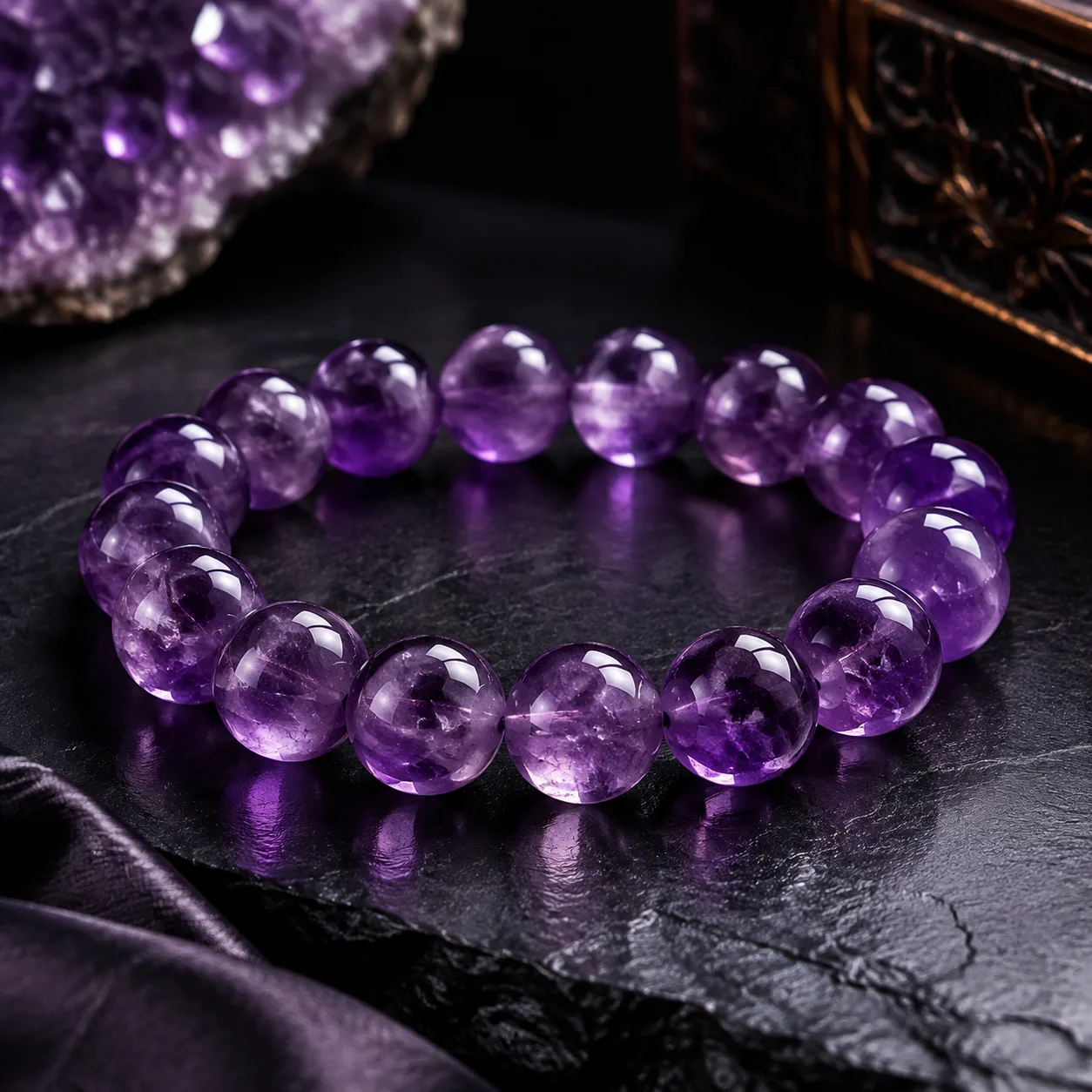
To measure your wrist for a bracelet, wrap a soft tape measure around the wrist just above the wrist bone, keeping it flat against the skin but not tight. Read the number, then add 1–1.5 cm for comfort. That final figure is the bracelet's inside circumference — the number to order.
It takes about thirty seconds, and it is the single thing that most often goes wrong when someone orders a handmade bracelet online. Everything below is the detail behind that one sentence.
What should I use if I do not own a dressmaker's tape?
A soft tape is ideal because it bends without stretching. If you do not have one, any of these work just as well:
- A strip of paper about 1 cm wide — wrap it, mark where the ends overlap with a pen, then lay it flat against a ruler.
- A piece of non-stretchy string, ribbon or dental floss — same method. Avoid elastic or yarn; both stretch and will give you a measurement that is too small.
- A strip cut from a plastic bag — thin enough to sit flat, and it does not stretch.
Whatever you use, the rule is the same: it must lie flat in a full circle with no twist. A twisted strip reads short.
Where exactly on the wrist do I measure?
Place the tape about 1 cm above the wrist bone — the bony bump on the outside of the wrist, on the little-finger side. This is where a bracelet naturally sits when your hand relaxes.
Not at the narrowest point of the forearm, and not down over the hand. Measuring too high up the arm gives a number that is too large; measuring across the hand gives one that is far too large.
Measure the wrist you will wear the bracelet on. Most people have a difference of 2–4 mm between left and right, which is small, but if you wear a watch every day, measure that wrist with the watch off and consider going up one step — the watch adds bulk that a bracelet has to sit beside.
How much ease should I add?
Ease is the gap between your wrist and the inside of the bracelet. Without it the bracelet feels tight; with too much it slides around and spins.
| Fit you want | Ease to add | Feels like |
|---|---|---|
| Snug | +0.5 to +1 cm | Stays put, slight pressure, dressy |
| Comfortable (most people) | +1 to +1.5 cm | Moves a little, no pressure |
| Relaxed | +1.5 to +2.5 cm | Slides over the wrist bone easily, casual |
For a beaded bracelet strung on elastic, +1 to +1.5 cm is the sweet spot. For a rigid bangle, you cannot use ease at all — the bangle has to pass over the widest part of your hand, so measure the hand circumference at the knuckles instead and check the opening against that number.
Does bead size change the fit?
Yes, and it catches people out. The measurement above gives you the circumference of your wrist. What you actually need is the inside circumference of the strung bead circle, and large beads eat into that.
A bracelet strung with 4 mm beads sits closer to your wrist than one strung with 10 mm beads at the same inside circumference, because the beads have thickness and the string sits further out. In practice:
- Small beads (2–4 mm): drape closely, feel lighter, sit closer to the wrist.
- Medium beads (6–8 mm): the everyday range, a visible gap of a few millimetres.
- Large beads (10 mm and above): the inner circle sits noticeably further out; if you are between sizes, the smaller size usually looks better.
If you already own a bracelet that fits well, the most reliable method of all is simply to measure that one: lay it flat and measure from the inside edge of the clasp to the inside edge of the last bead. Send us that number and we will match it.
What if my wrist falls between two sizes?
Choose the larger one, and mention your exact measurement in the order note. Because our pieces are made to order rather than pulled from a bin of finished stock, we can adjust the string length by a bead or two before it ships.
Two rules of thumb that hold up in practice:
- Between sizes on a beaded bracelet → go up. A slightly loose strand looks relaxed; a tight one looks strained and puts stress on the elastic.
- Between sizes on a clasp bracelet → go down. A clasp piece with an extender chain gives you room to adjust, and a closer fit stops the clasp from rotating to the top of your wrist.
How do I measure for a gift without the person noticing?
Three ways that work:
- Borrow an existing bracelet. Measure its inside circumference while they are not wearing it and return it. This is the most accurate method by far.
- Measure a watch strap. If they wear a watch, the strap length or the hole they use tells you a lot.
- Estimate from build. A small-framed adult is usually 14–15 cm, average 15–16.5 cm, broad 17–19 cm. Then tell us it is a gift — we will string it slightly long so it can be adjusted, or include an extender.
If you are unsure, say so when you order. We would rather add an extender than have you guessing.
Does the clasp type matter for sizing?
It does. A lobster or spring-ring clasp adds roughly 1–1.5 cm of hardware to the total length, and that hardware has to be counted inside the circumference you calculated. A magnetic or barrel clasp adds less. An extender chain adds length you can choose to use or not.
When you send us a measurement, tell us the clasp style you are ordering and whether you are measuring your wrist or copying a bracelet you own. Those two numbers are not the same, and mixing them up is the most common cause of a poor fit.
Frequently asked questions
Should I measure tightly or loosely?
Flat against the skin, no gap, no tension. If the tape leaves a mark, it is too tight. Take the measurement twice and use the larger reading.
Do you make sizes outside the standard range?
Yes. Because every piece is strung to order, we can go smaller or larger than the listed sizes. Send your wrist measurement and we will confirm before making it.
Can a bracelet be resized after I receive it?
On elastic-strung pieces, yes — restringing is straightforward and we can talk you through it or do it for you. On wire or chain pieces, an extender is usually the simpler fix.
How do I measure for an anklet?
Same method, one joint down: wrap the tape around the ankle just above the ankle bone, then add 1–1.5 cm. Anklets are usually 2–4 cm larger than a bracelet on the same person.
My wrists are different sizes. Which do I use?
The wrist you will wear it on. If you plan to swap wrists, use the larger measurement and add 1 cm. --- Every piece in our jewelry collection is made to order in our Fujian workshop, so your measurement goes directly into the piece rather than into a size chart we hope you fit. Sizes, colours and current options are listed on the Lumi atelier Gems shop. Questions about a specific wrist measurement? Message us on WhatsApp and we will confirm before you order.
Free printable measuring tape & size chart
A printable measuring tape plus our size chart for bracelets, rings, collars and pet clothing, in centimetres and inches. Print it at 100% scale, measure at home, and send us the number — we will confirm the size before you order.
One email with the printable chart. No newsletter, no reselling your address. Reply "stop" to unsubscribe.
Every piece is made to order in Fujian. Custom colors, sizes and wholesale are welcome.
Start a custom order