How to Stack Bracelets Without Looking Like You Tried Too Hard
2026-09-28 · by Lumi atelier · Fujian, China
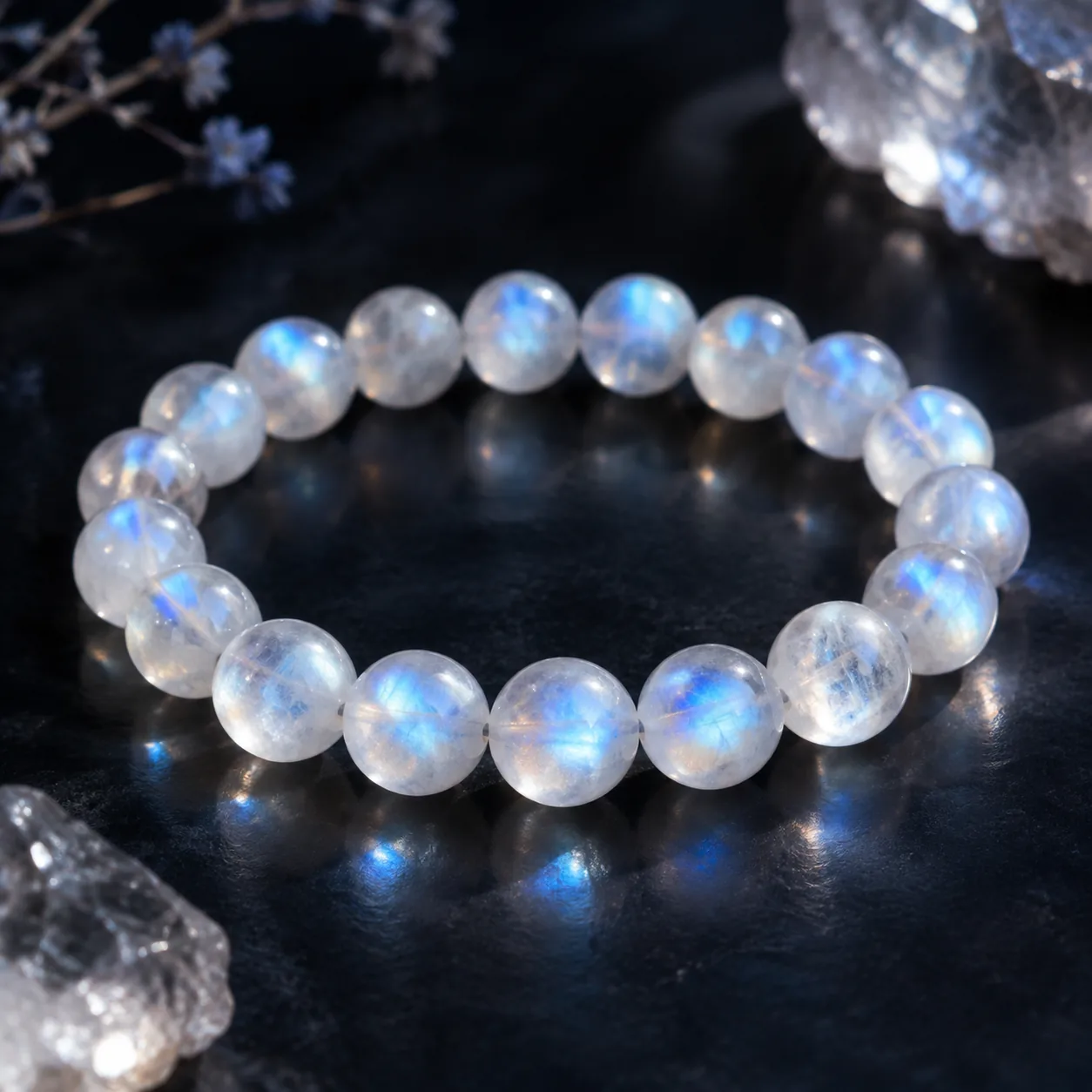
A good bracelet stack follows five rules: choose one anchor piece and build around it, mix textures instead of colours, keep the total to an odd number, vary the bead sizes so the strands do not line up, and leave the other wrist empty. Three to five pieces is the range that looks considered rather than crowded.
Everything past that sentence is the reasoning, plus the mistakes that make a stack look accidental.
What is an anchor piece, and why start there?
The anchor is the piece the stack is built around — usually the largest, heaviest, or most detailed one. It sets the scale and the tone. Everything else is supporting.
Pick the anchor first, put it on, then add. Stacking the other way — grabbing four bracelets you like individually and putting them on together — is how you end up with a wrist that looks busy for no reason.
Good anchors: a chunky stone strand, a cuff, a piece with a pendant or charm, or a watch. The anchor does not have to be the most expensive piece; it has to be the one with the most visual weight.
Should the colours match?
Not exactly — they should relate, without matching. Matching exactly is the mistake. Three strands in the same shade of purple read as one wide band and lose all definition.
What works better:
- One colour family, several values. Deep amethyst, pale lavender, and a grey-toned stone. Related, but each piece is still visible.
- Neutral base plus one accent. Obsidian, pearl, and gold as the base; one strand of green stone as the accent.
- Warm or cool, not both. Mixing warm metals and cool stones across a whole stack creates a low-level clash. Pick a temperature and stay there, or let the anchor decide.
If you want one rule to remember: contrast in texture, harmony in colour. A matte strand beside a polished one beside a faceted one reads as deliberate even when all three are the same colour, because the light catches each differently.
How many bracelets is too many?
Three, five, or seven — odd numbers look intentional. Even numbers look like pairs, which reads as accidental.
In practical terms:
| Count | Effect |
|---|---|
| 1 | Deliberate minimalism. Fine, but it is not a stack. |
| 2 | Looks like you put on two bracelets. Add one or take one off. |
| 3 | The everyday stack. Enough to read as styled, not enough to get in the way. |
| 5 | Full, expressive. Best with thin strands and a clear anchor. |
| 7+ | Works only if every piece is fine and the colour range is tight. Otherwise it is noise. |
Also consider your forearm. A stack that looks right on a long forearm can overwhelm a short one. If your wrist is small, three thin strands will look better than five average ones.
Do the bead sizes matter?
Yes, and this is the detail most people skip. If every strand is the same bead size, the strands sit in parallel lines and the stack looks like a striped sleeve.
Vary the sizes: 4 mm beside 8 mm beside a 10 mm anchor. The strands then sit at different heights and catch the light at different angles, which is what makes a stack look three-dimensional rather than flat.
Two practical notes:
- Put the largest beads nearest the hand. They sit on the wider part of the wrist, so they do not crowd the narrower part above.
- One metal tone, or two at most. Gold and silver together can work, but three metal colours in one stack rarely does.
Should I wear a watch in the stack?
Yes, and a watch makes an excellent anchor. Two ways to wear it:
- Watch as the anchor, strands below it — the classic. Everything sits on the wrist side of the watch, below the face.
- Watch slightly separated — a gap of about 1 cm between watch and stack. This reads tidier in formal settings and stops the strands from scratching the case back.
If your watch has a metal bracelet rather than a strap, treat the metal as the texture and keep the beads matte or faceted rather than polished, so the two do not compete for shine.
What mistakes make a stack look accidental?
- Everything the same width. No hierarchy, no anchor.
- Every piece a different colour. Reads as a jewellery box spill.
- Two bracelets. Almost always looks like an accident.
- Stacking both wrists. One wrist carries the stack; the other stays bare or takes a single piece. Full stacks on both wrists look like costume.
- Ignoring the sleeve. A stack that stops a long-sleeve cuff looks fine. A stack that fights a tight cuff looks uncomfortable. Match the stack width to the sleeve.
Does it matter for work or formal settings?
It does. A good working rule: the more formal the setting, the fewer the pieces and the quieter the colour.
- Everyday / casual: three to five strands, colour welcome, texture contrast welcome.
- Office: three pieces, one metal tone, matte or small beads, nothing that clicks against a desk.
- Formal: one anchor plus one fine strand, or a single cuff. Nothing that moves audibly.
Noise is the thing people notice in quiet rooms. Beads knocking against a watch case or a metal cuff clicking can be heard across a table. If it makes sound when you type, take a piece off.
How do I keep a stack from tangling?
Partly it is physics: strands of different inner circumferences slide over each other rather than sitting in a single band. So build the stack with slightly different sizes rather than four strands of identical length.
- Alternate elastic-strung strands with chain or cord pieces — different materials grip each other less.
- Put the heaviest piece at the bottom, nearest the hand; it settles and the lighter pieces rest on it.
- Store each strand separately. A pile of bracelets in a dish is where tangles and scratched beads come from.
Frequently asked questions
Can I stack bracelets with a watch?
Yes — the watch usually works best as the anchor piece, with strands sitting below it on the wrist side. Leave a small gap if you want to protect the case from scratches.
Should metals match in a stack?
One metal tone is safest. Two can work if one clearly dominates. Three rarely looks deliberate.
How many bracelets should a beginner start with?
Three: one anchor with visual weight, one contrasting texture, one fine strand to finish. Wear that for a week before adding anything.
Do bead sizes need to match?
No — they should not. Varying bead size is what stops strands from lining up in parallel rows.
Will stacking damage the bracelets?
Harder stones can scratch softer ones and any metal findings. Store pieces separately, put the heaviest strand nearest the hand, and restring elastic annually if you wear a stack daily. --- Every piece in our jewelry collection is strung to order in Fujian, so we can adjust bead size and strand length across a set so the pieces sit together properly rather than in parallel. Sizes, materials and current options are on the Lumi atelier Gems shop. Want a stack built to a wrist measurement? Send it on WhatsApp and we will put a set together.
Free printable measuring tape & size chart
A printable measuring tape plus our size chart for bracelets, rings, collars and pet clothing, in centimetres and inches. Print it at 100% scale, measure at home, and send us the number — we will confirm the size before you order.
One email with the printable chart. No newsletter, no reselling your address. Reply "stop" to unsubscribe.
Every piece is made to order in Fujian. Custom colors, sizes and wholesale are welcome.
Start a custom order